Shallini Okane
Written by Jamie Davies
Born in Mauritius before moving to the UK with her husband and kids, Shallini Okane maintains a busy lifestyle. She’s a keen cook, as comfortable cooking Indian butter chicken as she is Italian arrabiata. When not working in a restaurant she also volunteers with a number of charities and non-profits including Croydon Vision, a local sight loss organisation. She’s a loving mother too, a job which, as any mother will attest, can easily become all-encompassing.
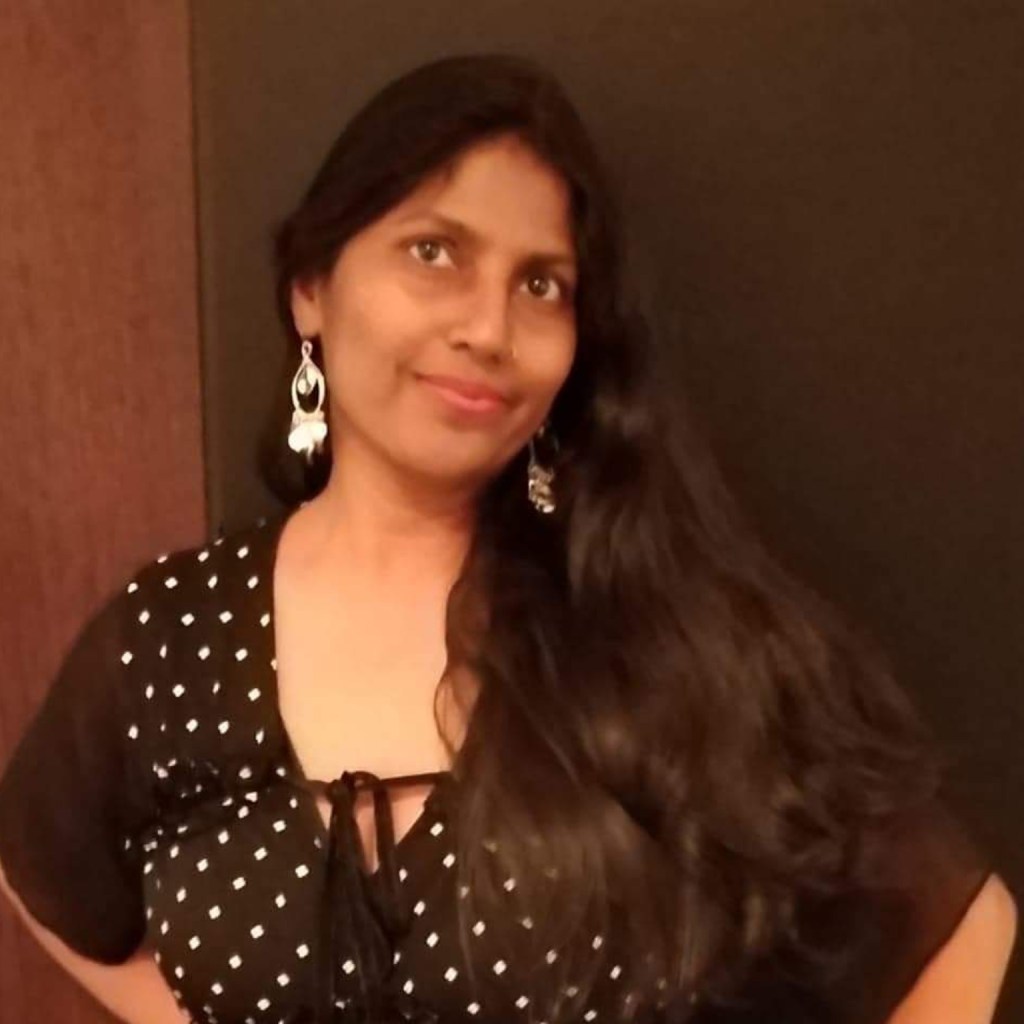
Needless to say, this proud wife and mother leads a rich, fulfilling life, but it’s not always been easy. Shalllini has struggled with sight issues since childhood. She is currently going through the process of being diagnosed with a form of macular dystrophy, a condition which has changed the trajectory of her life and continues to impact her daily routine.
Shallini first noticed something was wrong with her vision as a young teenager living in Mauritius. In class, all the other kids were able to see the blackboard with ease, but Shallini couldn’t. She explains, “when I read I have to look really close…[now] I have a magnifier which I put in a glass, so sometimes I use that to read but I can’t walk with it”. Her mum took her to the doctor, who prescribed glasses, but they didn’t help. The doctors shrugged their shoulders: as far as they were concerned nothing more could be done. At the time, nobody mentioned the existence of a local school dedicated to helping vision-impaired students, so Shallini was left behind academically, forced out of school and into the working world.
This came as a blow to Shallini, who was academically competitive. She prided herself on her stellar essays and top performance in academic competitions. At the age of 13 and 14, success for her meant excelling at school, and that was how she was going to fulfil her dream of finding a husband and travelling the world. It demolished her self-esteem and made her feel unlovable. “There were a lot of moments where I cried when I couldn’t see…”, she says, “…for a long time I never thought I was beautiful.”
The working world came with its own ups and downs for Shallini. Her vision problems caused embarrassment at work, and for the longest time it prevented her from pursuing jobs that suited her charisma and gift for language. She didn’t take career-advancing opportunities as a kids’ activities coordinator because they involved written tests and educational courses. If she took them, it would expose the extent of her vision problems, something that was unthinkable for her at the time. Jobs that she would have loved to work, such as one-to-one caring, seemed impossible too, because she would have been unable to read stories, manage medication or operate intricate technology. Instead she kept her secret, not even telling long-term boyfriends and their families. Looking back on it, she laughs at her behaviour: “I don’t understand why I didn’t tell them!”.
Things changed when she met her husband and moved to the UK for the first time. “…I told him I can’t see very well and actually he went in and looked into it.”, she says. Her husband encouraged Shalllini to seek a diagnosis for her vision issues, a process which is now nearing its completion. The support of her husband also emboldened her to seek opportunities helping others, opportunities she would have felt unable to chase in the past. She now volunteers for charities like Croydon Vision and her brother’s own association which empowers people living with disabilities. This gives Shallini a space to engage with people and use her language skills to support people who don’t speak fluent English.
With the UK government’s Access to Work scheme, which supplies accessibility equipment to people who need it in the workplace, the working world is now open to Shallini. She’s excited to pursue jobs mentoring others. While she’s still apprehensive, she feels ready to take those first steps.“I will start small and see what happens.”, she says. Similarly, she now feels confident enough to tell people in her life about her vision issues, even if not everybody needs to know: “Even now I say to my husband ‘I don’t think I need to tell this one or that one’…it just depends.”
Sight loss knocked Shallini’s confidence. It made her feel inadequate and unable to live the life she always dreamed of. Now, thanks to the support of her family, charities like Croydon Vision and schemes like Access to Work, she is reclaiming what she thought she had lost at age 13. Sight loss comes with challenges, but it never needs to hold you back


Blindsided
At 19, the world is yours. But sight loss doesn’t care about your age, and it can bring your life to a standstill. Based on a true story.
 14 Stories